
MCP integration
SkeinRank can expose domain-language context to AI agents through an MCP server. The goal is not to make agents guess company terminology from prompts. The goal is to let agents request governed context before they call search, RAG, or tool workflows.
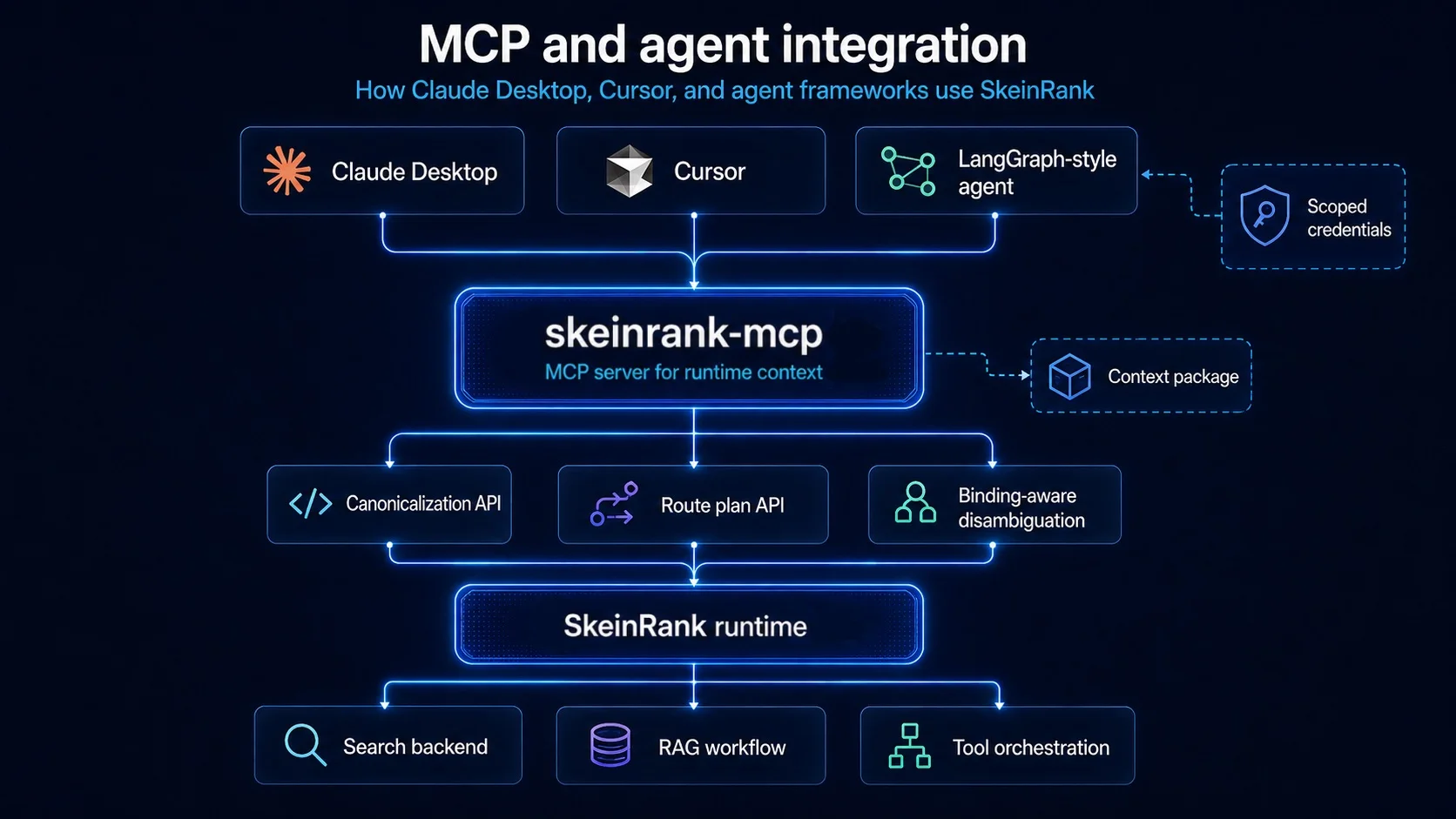
What the MCP layer is for
Section titled “What the MCP layer is for”The MCP layer should expose a small set of agent-friendly tools around SkeinRank runtime behavior:
| Tool category | Purpose |
|---|---|
| Canonicalization | Explain which aliases were recognized and which canonical values they map to. |
| Route planning | Return the binding-aware context package and suggested execution targets. |
| Evidence lookup | Show examples that support a term or alias decision. |
| Snapshot inspection | Tell the agent which immutable terminology version is active. |
Example agent flow
Section titled “Example agent flow”Agent receives: "Check the pg timeout incident" ↓Agent asks skeinrank-mcp for context in the infra workspace ↓SkeinRank resolves pg → postgresql through the selected binding ↓Agent calls search/RAG/tools with the canonical context packageScoped credentials
Section titled “Scoped credentials”Agent integrations should use scoped credentials rather than admin tokens.
A good production credential should be limited by:
- environment;
- tenant or workspace;
- allowed profiles or bindings;
- read-only vs write access;
- permitted tools;
- expiration and rotation policy.
Recommended default
Start with read-only MCP credentials that can canonicalize, plan routes, inspect snapshots, and read evidence. Keep profile edits and snapshot publication behind human review.
Claude Desktop, Cursor, and framework agents
Section titled “Claude Desktop, Cursor, and framework agents”Different clients can use the same MCP server pattern:
Claude Desktop
Useful for local exploration, architecture review, and asking questions over governed terminology.
Cursor
Useful when an IDE agent needs to understand repository-specific aliases, service names, and runtime bindings.
LangGraph-style agents
Useful when application agents need deterministic context before selecting search, RAG, or tool actions.
Custom agents
Useful for internal assistants that must use approved terminology, not prompt-only guesses.
What not to expose first
Section titled “What not to expose first”Avoid giving agents broad write access too early. The first MCP surface should be conservative:
read context → explain aliases → plan route → call downstream toolsGovernance actions such as approving aliases, publishing snapshots, and changing binding policies should remain human-reviewed until the organization is ready for stricter automation.